


What are you looking for?
1_Vehicle brand
2_Vehicle model
3_Repair type
Audi

ZMserwis is an Audi electronics repair company. We remanufacture controllers which, after prior consultation, simply need to be sent to our premises. The repair does not exceed 48h from the receipt of the sub-assembly and then we send back the working part.
If you do not find information about the fault or the component, please contact us by phone or via the contact form.
Please also check: repair of automatic transmissions
Select vehicle model
Blog
10/28/2025
How do you correctly identify an ABS pump failure?
How do you correctly recognise an ABS pump failure?
The ABS (anti-lock braking system), or Brake Assist System, is an essential piece of equipment for most cars on our roads. In Western Europe, all cars placed on the market after 2004 must be equipped with it. In Poland, it has been compulsory since 2006. ABS used to be only available on luxury cars, but following the introduction of safety requirements, it is now fitted to cars of all classes. The function of ABS is to prevent skidding during braking. Although extremely helpful, ABS is not foolproof and can play tricks on owners of cars that are equipped with it. Malfunctions related to the braking system can be extremely dangerous for users while driving, so it is worth visiting a mechanic immediately as soon as the worrying ABS light comes on. What is ABS and how does it work? What malfunctions can occur and how can you recognise the symptoms? We will explain all this to you today.
What is ABS and why is it so important?
ABS is a system that prevents the wheels of a vehicle from locking during braking, which helps considerably when emergency braking is required and during a skid. It also shortens braking distances and ensures control of the car on slippery surfaces. The braking system then works in a pulsating manner, alternately reducing and increasing the braking force, so that the vehicle can be stopped quickly and as safely as possible.
How does the ABS system work?
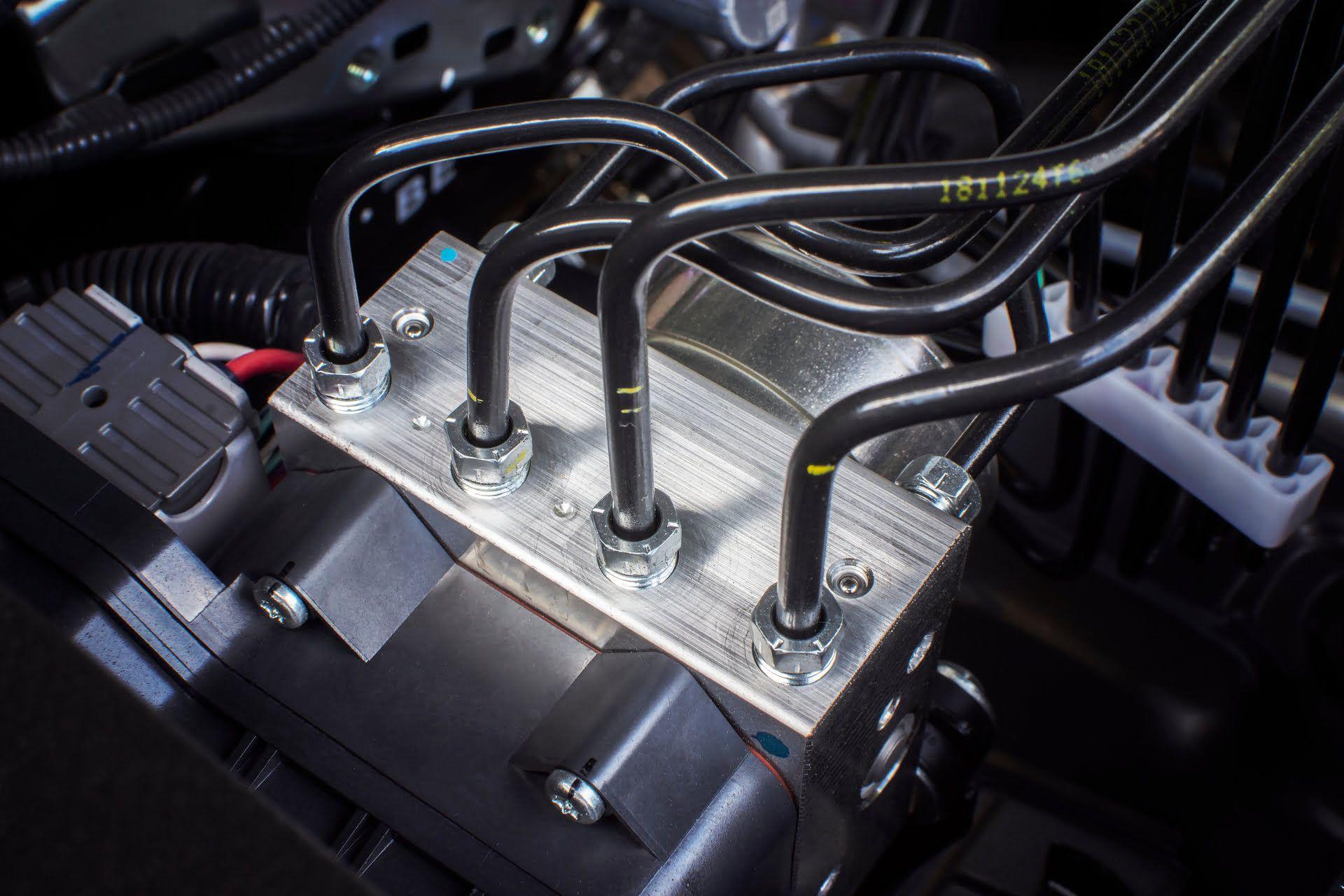
The ABS system consists of three components: a pump, sensors and a controller and is based on the brake system. Fundamental to the proper functioning of both of these systems is the brake fluid, which ensures that the force is transferred from the pedal to the brake pads. When the brake is applied, the fluid pressurises the pads, which increases the braking force. The ABS system prevents the wheels from locking up during rapid deceleration by means of high pressure. The sensors with which the vehicle is equipped continuously monitor the speed at which the wheels are spinning, and if one of the wheels starts to slow down, the system reads this as a skidding. This reduces the brake fluid pressure in the wheel in question, so that the braking force is also reduced. When the speed levels off again, the ABS switches off and restarts again in an emergency.
ABS failure - how does it manifest itself?
The braking system is a complex system with many components, any one of which can fail, manifesting itself in an alarming ABS light. Causes may include a defective wheel speed sensor, insufficient brake fluid level, a malfunctioning ABS module, a faulty master cylinder or hydraulic system, so if you notice a worrying ABS light, you should visit a mechanic as soon as possible and be extra careful on the road. The braking system plays an extremely important role in every vehicle, being responsible for our safety, and the failure of any of the above system components can lead to dangerous situations. A lack of pressure in the hydraulic system will cause the brakes to stop working, which is extremely dangerous when driving. Problems with the ABS can also be indicated by a characteristic jerking sound when braking, caused by the pump supplying brake fluid in bursts. If there is a problem with the controller, the brakes can lock up completely. For this reason, it is always a good idea to pay close attention to matters relating to the brakes and ABS, and not to underestimate any disturbing signals that are sent out by the sensor and appear on the dashboard. In view of the important role the brakes play in a car, it is important to take care of them and to be particularly attentive and careful in the event of a breakdown. If you need to have your brakes, ABS pump or any other part of the system repaired, you should visit an approved mechanic as soon as possible to have the problem repaired.
10/28/2025
How do you correctly identify an ABS pump failure?
How do you correctly recognise an ABS pump failure?
The ABS (anti-lock braking system), or Brake Assist System, is an essential piece of equipment for most cars on our roads. In Western Europe, all cars placed on the market after 2004 must be equipped with it. In Poland, it has been compulsory since 2006. ABS used to be only available on luxury cars, but following the introduction of safety requirements, it is now fitted to cars of all classes. The function of ABS is to prevent skidding during braking. Although extremely helpful, ABS is not foolproof and can play tricks on owners of cars that are equipped with it. Malfunctions related to the braking system can be extremely dangerous for users while driving, so it is worth visiting a mechanic immediately as soon as the worrying ABS light comes on. What is ABS and how does it work? What malfunctions can occur and how can you recognise the symptoms? We will explain all this to you today.
What is ABS and why is it so important?
ABS is a system that prevents the wheels of a vehicle from locking during braking, which helps considerably when emergency braking is required and during a skid. It also shortens braking distances and ensures control of the car on slippery surfaces. The braking system then works in a pulsating manner, alternately reducing and increasing the braking force, so that the vehicle can be stopped quickly and as safely as possible.
How does the ABS system work?
The ABS system consists of three components: a pump, sensors and a controller and is based on the brake system. Fundamental to the proper functioning of both of these systems is the brake fluid, which ensures that the force is transferred from the pedal to the brake pads. When the brake is applied, the fluid pressurises the pads, which increases the braking force. The ABS system prevents the wheels from locking up during rapid deceleration by means of high pressure. The sensors with which the vehicle is equipped continuously monitor the speed at which the wheels are spinning, and if one of the wheels starts to slow down, the system reads this as a skidding. This reduces the brake fluid pressure in the wheel in question, so that the braking force is also reduced. When the speed levels off again, the ABS switches off and restarts again in an emergency.
ABS failure - how does it manifest itself?
The braking system is a complex system with many components, any one of which can fail, manifesting itself in an alarming ABS light. Causes may include a defective wheel speed sensor, insufficient brake fluid level, a malfunctioning ABS module, a faulty master cylinder or hydraulic system, so if you notice a worrying ABS light, you should visit a mechanic as soon as possible and be extra careful on the road. The braking system plays an extremely important role in every vehicle, being responsible for our safety, and the failure of any of the above system components can lead to dangerous situations. A lack of pressure in the hydraulic system will cause the brakes to stop working, which is extremely dangerous when driving. Problems with the ABS can also be indicated by a characteristic jerking sound when braking, caused by the pump supplying brake fluid in bursts. If there is a problem with the controller, the brakes can lock up completely. For this reason, it is always a good idea to pay close attention to matters relating to the brakes and ABS, and not to underestimate any disturbing signals that are sent out by the sensor and appear on the dashboard. In view of the important role the brakes play in a car, it is important to take care of them and to be particularly attentive and careful in the event of a breakdown. If you need to have your brakes, ABS pump or any other part of the system repaired, you should visit an approved mechanic as soon as possible to have the problem repaired.
10/28/2025
How do you correctly identify an ABS pump failure?
How do you correctly recognise an ABS pump failure?
The ABS (anti-lock braking system), or Brake Assist System, is an essential piece of equipment for most cars on our roads. In Western Europe, all cars placed on the market after 2004 must be equipped with it. In Poland, it has been compulsory since 2006. ABS used to be only available on luxury cars, but following the introduction of safety requirements, it is now fitted to cars of all classes. The function of ABS is to prevent skidding during braking. Although extremely helpful, ABS is not foolproof and can play tricks on owners of cars that are equipped with it. Malfunctions related to the braking system can be extremely dangerous for users while driving, so it is worth visiting a mechanic immediately as soon as the worrying ABS light comes on. What is ABS and how does it work? What malfunctions can occur and how can you recognise the symptoms? We will explain all this to you today.
What is ABS and why is it so important?
ABS is a system that prevents the wheels of a vehicle from locking during braking, which helps considerably when emergency braking is required and during a skid. It also shortens braking distances and ensures control of the car on slippery surfaces. The braking system then works in a pulsating manner, alternately reducing and increasing the braking force, so that the vehicle can be stopped quickly and as safely as possible.
How does the ABS system work?
The ABS system consists of three components: a pump, sensors and a controller and is based on the brake system. Fundamental to the proper functioning of both of these systems is the brake fluid, which ensures that the force is transferred from the pedal to the brake pads. When the brake is applied, the fluid pressurises the pads, which increases the braking force. The ABS system prevents the wheels from locking up during rapid deceleration by means of high pressure. The sensors with which the vehicle is equipped continuously monitor the speed at which the wheels are spinning, and if one of the wheels starts to slow down, the system reads this as a skidding. This reduces the brake fluid pressure in the wheel in question, so that the braking force is also reduced. When the speed levels off again, the ABS switches off and restarts again in an emergency.
ABS failure - how does it manifest itself?
The braking system is a complex system with many components, any one of which can fail, manifesting itself in an alarming ABS light. Causes may include a defective wheel speed sensor, insufficient brake fluid level, a malfunctioning ABS module, a faulty master cylinder or hydraulic system, so if you notice a worrying ABS light, you should visit a mechanic as soon as possible and be extra careful on the road. The braking system plays an extremely important role in every vehicle, being responsible for our safety, and the failure of any of the above system components can lead to dangerous situations. A lack of pressure in the hydraulic system will cause the brakes to stop working, which is extremely dangerous when driving. Problems with the ABS can also be indicated by a characteristic jerking sound when braking, caused by the pump supplying brake fluid in bursts. If there is a problem with the controller, the brakes can lock up completely. For this reason, it is always a good idea to pay close attention to matters relating to the brakes and ABS, and not to underestimate any disturbing signals that are sent out by the sensor and appear on the dashboard. In view of the important role the brakes play in a car, it is important to take care of them and to be particularly attentive and careful in the event of a breakdown. If you need to have your brakes, ABS pump or any other part of the system repaired, you should visit an approved mechanic as soon as possible to have the problem repaired.